Ever since the late eighties, Callaway has continued to influence the contemporary golf equipment niche. We have also witnessed how the brand has transitioned to fewer engineering breakthroughs and more data-driven, AI-aided designs that redefine distance, forgiveness, and consistency. To that end, in this guide, we have given the year-by-year listing of the callaway drivers by year in an easy-to-read, organized, and performance-based format to help the golfers understand how each of the generations developed and why some of them are relevant to this day.
Callaway drivers have always aimed at giving the real solutions to golfers. Distance, stability, launch control and forgiveness have been perfected step by step. Consequently, these drivers have trusted the professionals and amateurs over the decades. We have traced the entire history, with precision, clearness, and business understanding, below.
Year-by-Year Callaway Drivers History
The history of Callaway’s drivers serving by year represents incessant invention instead of immediate invention. Every release was based on the previous breakthroughs and this ensured that technology grew up rather than being discontinued too soon.
During the initial years, Callaway worked on the enhancement of the conditions of launch and forgiveness. It was later followed by the use of materials, weight distributions and structural stability. At some point, the intellectual intelligence and advanced carbon building completely transformed the design of the driver. This development is why older Callaway drivers remain effective and why the new models dominate in the contemporary fittings.
Early Era of Innovations: Callaway Drivers Year by Year (1988–1999)
The yearly callaway drivers have been based on radical thoughts that questioned the conventional clubmaking.
The S2H2 (Short Straight Hollow Hosel) driver in 1988 altered the redistribution of weight in a clubhead. Rather than increasing the mass around the hosel, the mass was moved to the perimeter. Consequently, forgiveness became much better.
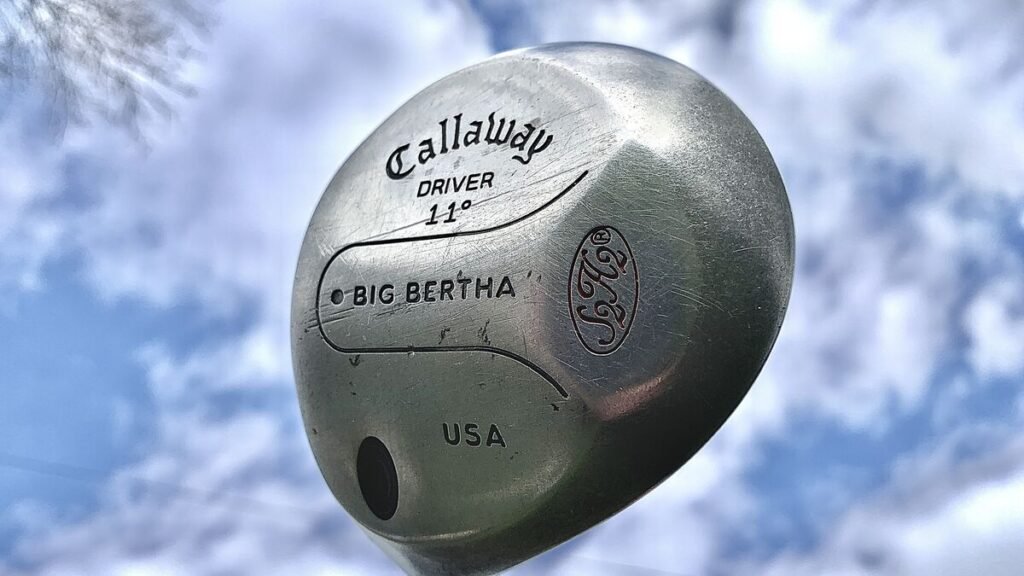
The announcement of the Original Big Bertha in 1991 changed everything in the industry. The heads of this type were not widely used in those days, but they provided better launch and straight-hit ball performance. In the 1990s, it was succeeded by incremental improvements. The Big Bertha Hawk Eye was introduced in 1999 with tungsten weighting in the heel to encourage a draw bias and reduce the center of gravity. These modifications allowed the driver to be more easily struck by a greater number of players.
By Year (2000–2006): Callaway Driver Material Breakthroughs
In this stage, the callaway drivers of the year entered into a new technological era. Variable Face Thickness (VFT) was introduced in the year 2000 with the Big Bertha Steelhead Plus. There was no uniformity in the face and instead thickness was different in areas of impact. Therefore, the speed of the ball remained elevated on off-center hits.
In 2002, the C4 driver had composite materials. This saved weight and repositioned it around the perimeter contributing to MOI and forgiveness. The Big Bertha Titanium 454 of 2005 was able to take head size to its extremes and to give the maximum effect of the legal spring. In the same year, Callaway had made its mark in the long-range driving contests, which supported the assertions of the driver in distance.
Big Bertha Titanium, FT-3, FT-5, and Big Bertha 460 were models (2004-2006) that perfected the concept of forgiveness and stability. At this point, Callaway drivers were associated with power and control.
Geometry and Stability Emphasis: Yearly (2007012) Callaway Drivers
This was the period of callaway drivers by the year that focused on non-standard shapes and internal engineering.
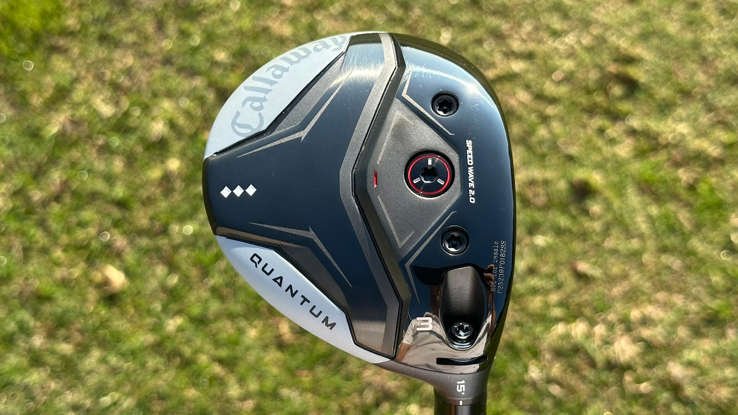
The FT-i series featured square driver heads, and this increased MOI and minimized twisting at impact. Though the shape was divisive, performance benefits were also undisputed. The FT-iQ was sold in 2008 as the smartest car driver in the world and was internally optimized with regard to the CG placement and the face efficiency.
By 2010 Polar Weighting came to the FT-iZ, where the mass was forwarded and back to stabilize the impact process, leaving the ball speed intact. In the same year, Forged Composite was introduced on the Diablo Octane drivers, permitting clubheads to be made lighter but stronger.
In 2011, the RAZR FIT driver was introduced with adjustable hosels and adjustable weights. This became a turning point since customization became a norm in the industry.
Adjustability and Speed -Callaway Drivers by Year (2013–2016)
Callaway drivers of this time focused on the generation of speed and installing players.
Other models like X Hot, FT Optiforce and Big Bertha Alpha focused more on lightweight construction and lower CG. Adjustable weighting systems enabled golfers to adjust spin and shot shape. In 2016, XR 16 and Big Bertha Fusion combined composite crowns with titanium bodies, gaining more forgiveness with no loss in the speed of the ball.
At this stage, Callaway had already managed to combine distance, adjustability, and forgiveness in the integrated design.
Jailbreak and AI Evolution: Callaway Drivers by Year (20172022)
The current identity of callaway drivers by year had indeed started in 2017 with Jailbreak Technology. The crown and sole were linked with vertical bars at the back of the face and the structure was made stable at impact. Consequently, the greater energy was passed on to the ball over a larger area.
This idea was perfected by Epic, Rogue, Mavrik, and Rogue ST drivers. The face architecture, aerodynamics and spin control were advanced with each generation. It is worth noting that Mavrik presented AI-generated faces to maximize the velocity of balls on thousands of virtual points of impact.
As of 2022, Rogue ST models provided high launch, controlled spin, and amazing forgiveness, thus becoming a favorite among the professionals and amateur golfers.
Carbon Chassis Age Years Callaway Drivers (2023-2025)
The recent stage of callaway drivers this year is a structural revolution. Paradym drivers have launched an industry-first 360-degree carbon chassis in 2023. Titanium was also taken out of the body to a large extent which saved weight and then it could be redistributed perfectly.
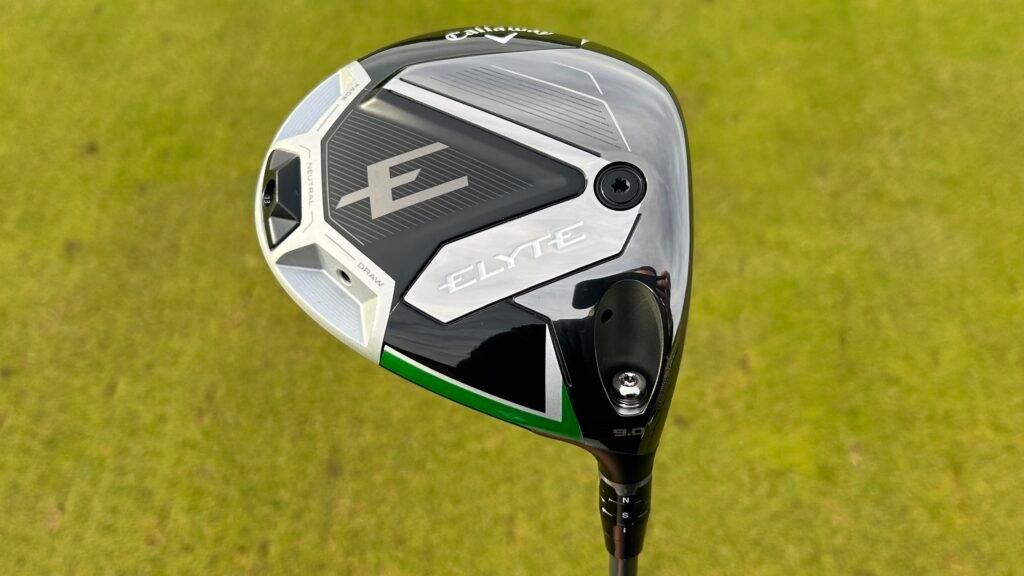
Paradym AI Smoke enhanced AI Smart Face in 2024. Launch conditions were more uniform and dispersion decreased significantly. In 2025, the trend was carried on in Elyte drivers with several head options, such as Max Fast and Triple Diamond, so that there is always an option to fit any type of swing.
All-Time Callaway Drivers by Year
| Year | Driver Models |
| 2025 | Elyte, Elyte X, Elyte Triple Diamond, Elyte Max Fast |
| 2024 | Paradym AI Smoke, AI Smoke Max, Max Fast, Triple Diamond |
| 2023 | Paradym, Paradym X, Paradym Triple Diamond, Great Big Bertha |
| 2022 | Rogue ST, Rogue ST Max, Max D, Max LS, Triple Diamond |
| 2021 | Epic Max, Epic Speed, Epic Max LS |
| 2020 | Mavrik, Mavrik Max, Sub Zero, Big Bertha B21 |
| 2019 | Epic Flash, Flash Sub Zero |
| 2018 | Rogue, Rogue Draw, Rogue Sub Zero |
| 2017 | Great Big Bertha Epic, Epic Sub Zero |
| 2016 | XR 16, XR 16 Pro, Big Bertha Fusion |
| 2015 | Great Big Bertha, Big Bertha Alpha 816 |
| 2010 | Diablo Octane, FT-iZ |
| 2005 | Big Bertha Titanium 454 |
| 2000 | Big Bertha Steelhead Plus |
| 1991 | Original Big Bertha |
| 1988 | S2H2 |
Why Callaway Drivers Still Dominate
One trend is constant when it comes to examining the Callaway drivers on a year-by-year basis: intentional evolution. Every generation tackled actual performance issues rather than using marketing statements on their own. There was better material, more adjustability and less guesswork in design based on data.
Due to this strategy, some of the older Callaway drivers are still playable to date, and the newer models are still the standard in forgiveness and speed.
Final Thoughts on Callaway Drivers by Year
This is a total analysis of the callaway drivers according to their years used in the analysis of how innovation, consistency and discipline in the engineering of their products made one of the most reliable driver lineups in golf. Since the massive Big Bertha revolution to the AI-enhanced carbon chassis, Callaway has influenced the manner in which players perform across all levels of the game.
Read More About :- Tiger and Charlie Woods: Father-Son Moment at the PNC Championship